By Debbie Wiedeman, OTR/L, TNOTA Member, Middle District
What if chilly air brushing against your cheeks while gliding on a 3/16-inch-thick steel blade can reduce fall risk and improve cardiovascular health?
Georgene Troseth (75), a retired psychology professor, thinks so. “I believe skating, and learning to fall safely during skating, has helped my balance and ability to deal with falls off the ice.” Further, she reports improved musculoskeletal function as a result of the weight bearing and isometric demands of the sport. “I have knee osteoarthritis. My doctor believes continuing to skate is keeping my knees from further deterioration.”
"I believe skating, and learning to fall safely during skating, has helped my balance and ability to deal with falls off the ice."
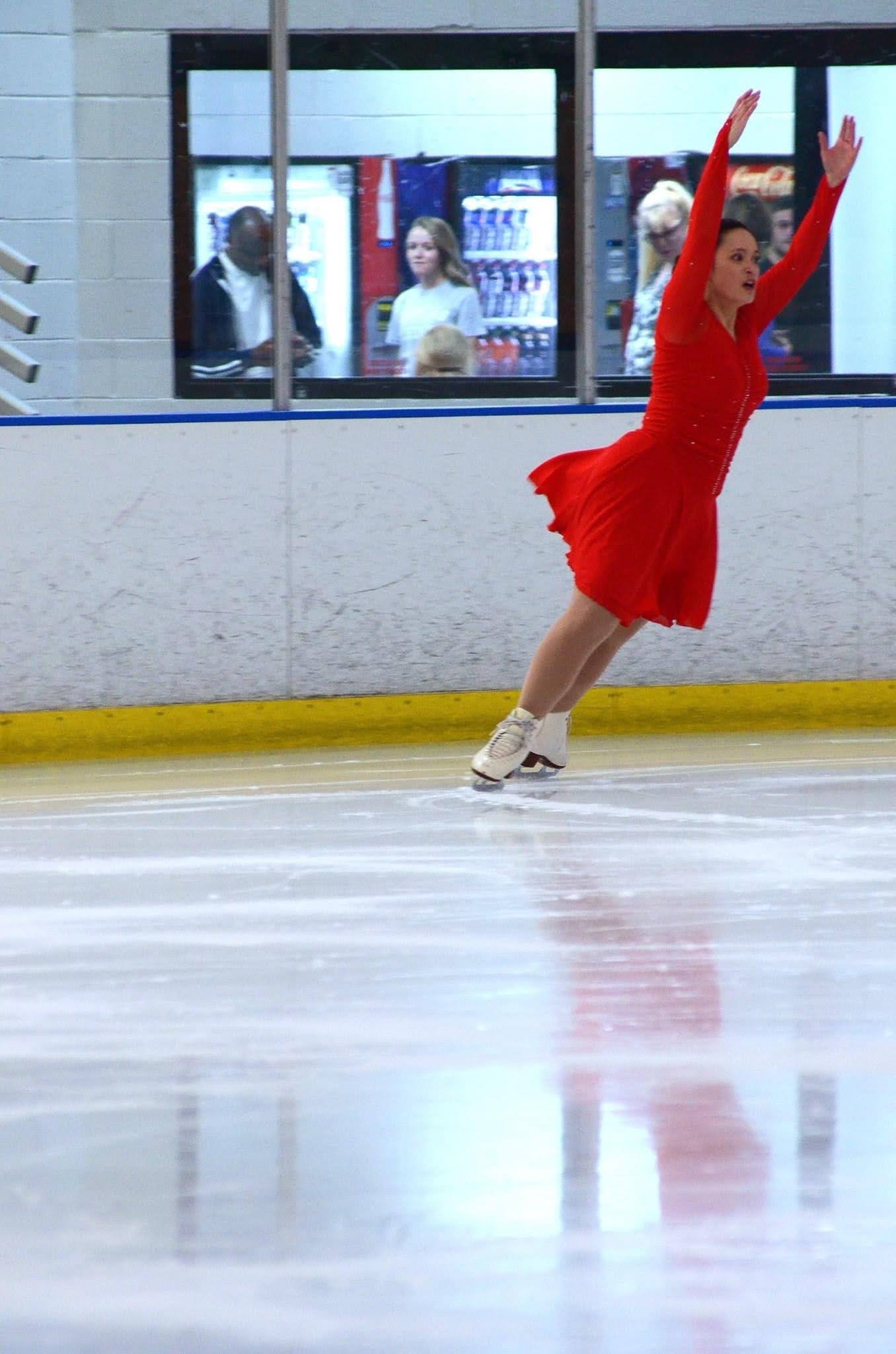
Photo 1: Roberta Sanders ice skating
Core strengthening, dynamic postural awareness, and musculoskeletal stability are inherent to figure skating. Adults regularly cite these as reasons they skate compared with participating in other fitness activities. Roberta Sanders (59), a paralegal, states, “Physically, my core strength, flexibility, balance, and cardio are strong for my age cohort, which makes me feel much younger and elevates my mood.” Georgene adds, “Learning to skate as an adult is challenging, but this can be a positive. For instance, trying to master the constantly changing steps and positions of ice dance is my cognitive therapy.”
Research backs up these claims. In 2025, Min-Su Kim published a randomized controlled trial of 34 patients at least 65 years old (mean 70.7 years) who experienced a stroke that scored three or
lower on the National Institute of Health Stroke Scale. The intervention and control groups performed exercises for 20 minutes, four days a week, over three months. The intervention group received off-ice figure skating based exercises incorporating lateral hops, progressive knee and ankle bends, quadricep loading and corresponding explosive contraction with associated alternating arm movements similar to skating laps around an ice rink. The control group received moderate intensity treadmill training.
At three months, both groups reported no falls and improved aerobic capacity. The skating exercise group showed significant improvements in cardiorespiratory function as measured by peak oxygen uptake, ventilatory threshold, and peak MET. The control group did not show improvements in Berg Balance Scale or skeletal muscle mass index scores whereas the skating exercise group demonstrated significant improvements in both of these measures. Based on the results combined with no adverse events reported, the researchers concluded that skating-based exercises can be a safe, effective protocol for older adults recovering from a minor stroke.
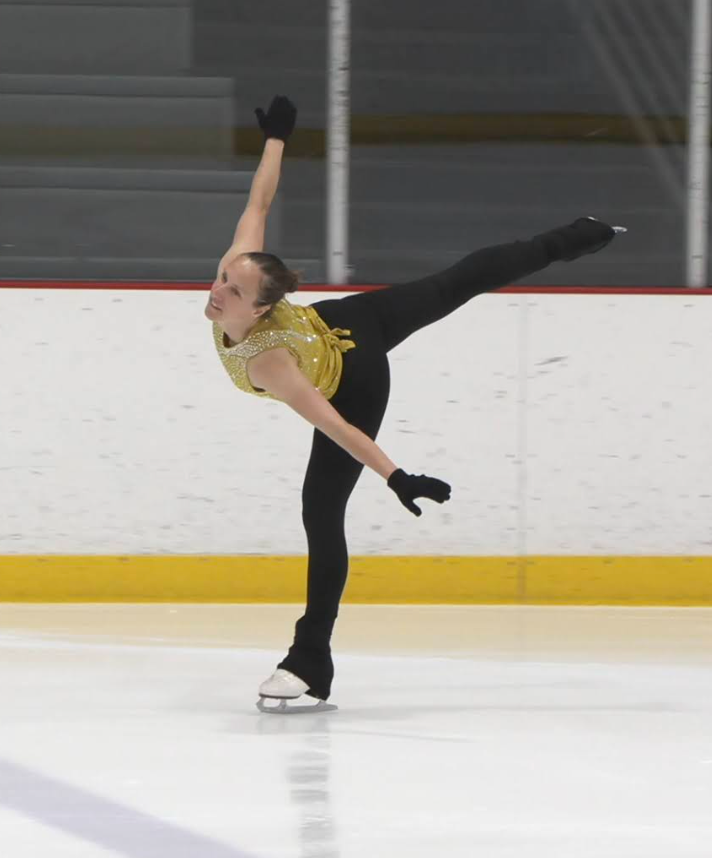
Photo 2: Debbie Wiedeman ice skating
The next time you search for the secret sauce to fall risk reduction, cardiovascular fitness, improved cognition, and musculoskeletal strengthening, you might be surprised by the possibilities available at your local figure skating rink.
Reference
Kim M. S. (2025). The Effect of Skating Exercises as High-Intensity Interval Training on Elderly Stroke Patients. Brain sciences, 15(7), 676. https://doi.org/10.3390/brainsci15070676